A digital personality with a highly distinctive appearance has attracted significant attention across social media platforms, generating millions of views and widespread discussion. Images and videos featuring the character quickly gained popularity, with many viewers praising the unique visual design and creative presentation. At first glance, some people believed the appearance was entirely authentic, leading to curiosity about the person behind the content. However, as interest continued to grow, audiences learned that the striking look was part of a carefully designed digital creation rather than a naturally occurring physical appearance.
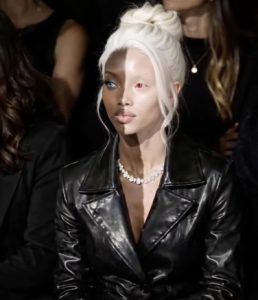
The online figure, known as Eva Delonne, gained recognition for a visually dramatic design featuring contrasting skin tones and different-colored eyes. Videos showcasing the character received substantial engagement, with many viewers expressing admiration for the artistic concept and attention to detail. The unusual appearance sparked conversations across social media, with users debating whether the images depicted a real person or a digitally created character. As the content spread online, many people were impressed by the realism and sophistication of the visual presentation.
Eva Delonne’s social media profiles feature a variety of content, including music-related posts, dance videos, and fashion-inspired imagery. However, online discussions and analysis from digital art communities suggest that the character is an AI-generated virtual influencer. Observers pointed to several visual inconsistencies commonly associated with advanced digital imagery, including variations in lighting, changing eye colors, and occasional irregularities in movement and image details. These observations contributed to a growing consensus that the content was created using digital design and artificial intelligence technologies rather than traditional photography alone.
The popularity of Eva Delonne highlights how advanced AI-generated content has become in recent years. Modern digital tools can create highly realistic images and videos that closely resemble real people, making it increasingly difficult for viewers to distinguish between authentic and computer-generated content. As technology continues to evolve, media literacy and careful evaluation of online content remain important. The widespread attention surrounding this virtual influencer serves as a reminder that appearances on the internet may not always reflect reality and that digital creations are becoming more sophisticated than ever before.